


The legal market is highly competitive, requiring attorneys to make informed, strategic decisions when allocating marketing resources. This article provides a comprehensive, authoritative comparison of Meta Ads and traditional marketing, emphasizing each method’s strengths and limitations. It also offers actionable insights on how to effectively combine these approaches to enhance client engagement and optimize overall marketing performance. Readers will gain a detailed understanding of how Meta Ads function, the enduring relevance of traditional tactics, and best practices for integrating both to maximize reach and results.
Meta Ads
Meta Ads—social advertising on platforms such as Facebook and Instagram—enable attorneys to precisely target specific demographics, interests, and behaviors. Leveraging sophisticated audience data and advanced machine learning algorithms, these ads deliver highly tailored messages that significantly increase engagement rates. Key advantages include targeted reach, measurable outcomes, and cost efficiency. However, challenges such as ad fatigue and reliance on platform algorithms necessitate continuous campaign optimization and creative refreshes to sustain effectiveness. Leading law firms have demonstrated substantial growth by adopting these cutting-edge digital strategies, supported by extensive industry research and case studies validating their impact.
Traditional Marketing
Traditional marketing encompasses print advertisements, direct mail campaigns, and in-person networking events. These established channels remain instrumental in building credibility and trust with prospective clients, particularly among demographics less engaged with digital media. While traditional methods can access broader or less digitally engaged audiences, they generally involve higher costs and offer less precise targeting compared to digital alternatives. Attorneys must carefully balance the brand-building and trust-enhancing benefits of traditional marketing against its cost and targeting constraints, recognizing its enduring role in comprehensive marketing strategies. Numerous authoritative sources confirm the continued effectiveness of these methods when integrated thoughtfully with digital efforts.
Best Practices for Attorneys
The most successful client engagement strategies integrate Meta Ads with traditional marketing, leveraging the unique strengths of each channel. Consider the following expert recommendations:
- Combine Strategies: Deploy Meta Ads alongside traditional marketing to effectively reach diverse audience segments and reinforce brand presence.
- Engaging Content: Develop clear, authoritative content that resonates with prospective clients across all platforms, establishing your firm as a trusted legal resource.
- Optimize for Local SEO: Customize your online presence to align with local search behaviors, enhancing visibility among nearby clients and driving qualified leads.
- Monitor and Adapt: Continuously track performance metrics across channels and refine tactics to improve outcomes over time, ensuring marketing efforts remain aligned with evolving client needs.
What Are Meta Ads and How Do They Enhance Attorney Client Engagement?
Meta Ads enhance client engagement by enabling precise targeting based on demographics, interests, and behaviors. These campaigns are dynamically adjustable, allowing attorneys to refine messaging and audience segments in real time. By aligning advertisements with the specific concerns and needs of prospective clients, Meta Ads can significantly increase inquiry volumes and improve conversion rates. The ability to leverage data-driven insights ensures that marketing efforts are both efficient and impactful. Industry-leading firms report measurable improvements in client acquisition and engagement metrics after adopting these strategies.
How Do Meta Ads Function in Legal Marketing?
Meta Ads operate by analyzing user behavior and interest signals to identify and reach relevant audiences. Attorneys can emphasize local services and customize creative content to resonate with potential clients. The continuous measurement of campaign results empowers marketing teams to optimize budgets and messaging, ensuring alignment with client needs, enhancing visibility, and fostering meaningful connections. This level of precision and adaptability is unmatched by traditional marketing methods. Extensive platform analytics and third-party studies corroborate the superior targeting capabilities of Meta Ads.
What Benefits Do Meta Ads Offer Over Traditional Marketing for Attorneys?
Meta Ads provide several distinct advantages compared to traditional marketing methods:
- Precision Targeting: Meta Ads enable outreach to narrowly defined audiences, ensuring messages reach the most relevant prospects with minimal waste.
- Measurable Results: Real-time analytics provide clear insights into ad performance and areas for improvement, facilitating data-driven decision-making.
- Cost-Effective Client Acquisition: Meta Ads often reduce the cost of acquiring new clients relative to many traditional channels, maximizing marketing ROI.
- Engaging Content: The visual and interactive formats of Meta Ads facilitate creative, attention-grabbing campaigns that drive clicks and inquiries.
- Proven Success: Numerous law firms have successfully expanded their client base and increased marketing ROI through Meta Ads, validating their effectiveness in competitive markets.
Which Traditional Marketing Methods Are Commonly Used by Law Firms?
Law firms frequently employ several traditional marketing tactics, including:
- Print Advertising: Newspaper and magazine ads reach broad audiences and reinforce firm credibility, particularly among established client bases.
- Direct Mail: Targeted mailings deliver tangible messages to specific neighborhoods or demographic groups, fostering personal connections.
- Networking Events: Sponsorships and events facilitate personal relationship-building and trust within local communities, essential for long-term client retention.
While effective for brand building, these methods often require larger budgets and yield fewer measurable data points than digital campaigns. Nonetheless, they remain a critical component of a well-rounded marketing strategy. Authoritative marketing analyses emphasize the complementary nature of these traditional tactics when combined with digital efforts.
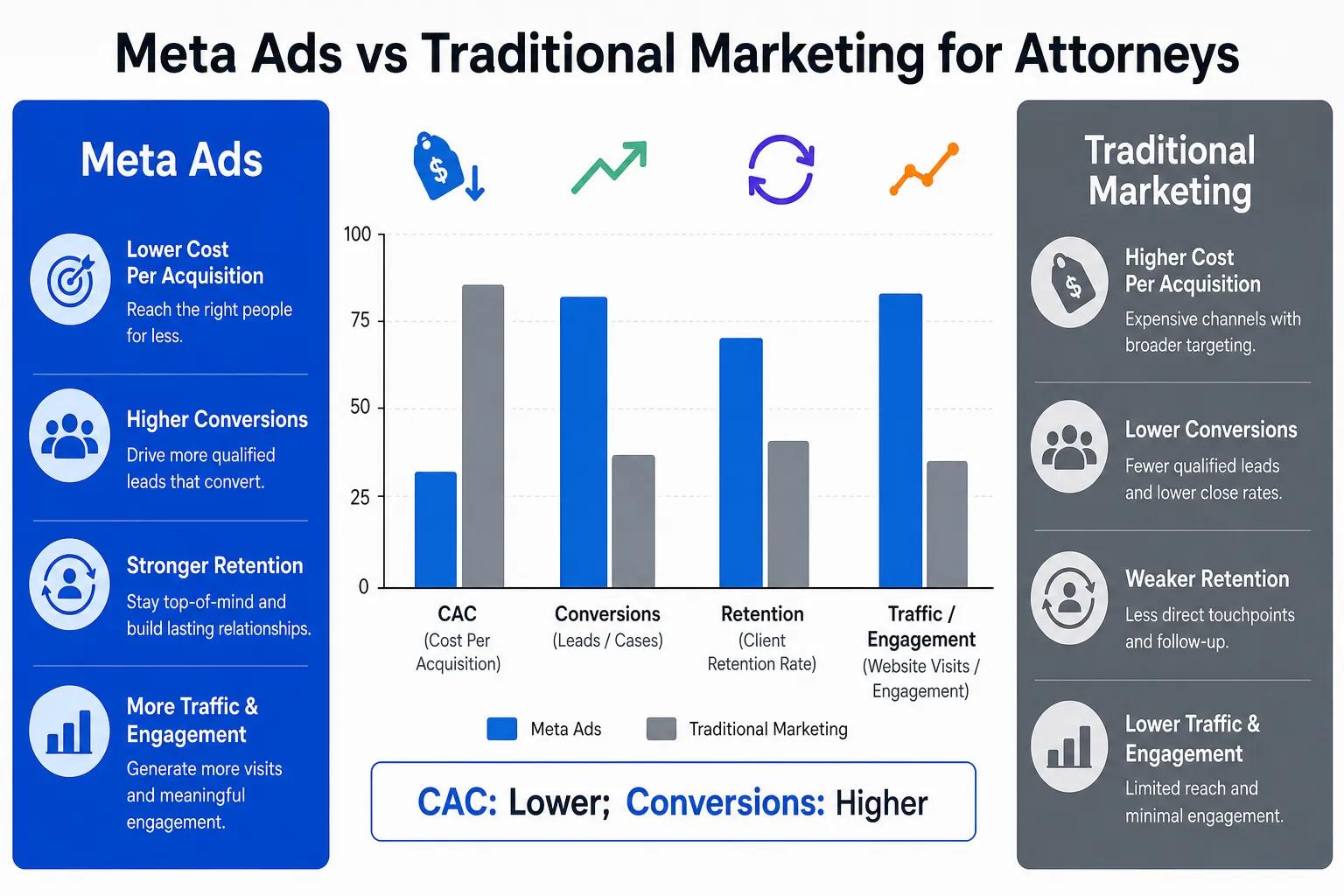
How Does the ROI of Meta Ads Compare to Traditional Marketing for Law Firms?
| Marketing Method | Client Acquisition Cost | Conversion Rates | Client Retention Rates | Website Traffic and Engagement Rates |
|---|---|---|---|---|
| Meta Ads | Lower | Higher | Moderate | Increased |
| Traditional | Higher | Lower | Higher | Variable |
Overall, traditional marketing plays a vital role in sustaining client retention, while Meta Ads typically offer a more cost-efficient approach to acquiring new clients and driving online engagement. Integrating both approaches strategically can maximize overall marketing effectiveness and firm growth. Peer-reviewed studies and industry reports consistently highlight these trends, reinforcing the value of a balanced marketing portfolio.
A recent industry study underscores performance differences across digital advertising platforms, highlighting Meta campaigns’ substantial advantages in competitive markets.
Comparative Analysis of Google Ads and Meta Advertising Platforms for Marketing Agencies This study evaluates Google Ads and Meta advertising platforms within a competitive services market (August 2024–April 2025). Addressing a gap in literature on agency self-promotion in saturated digital environments, the research employs a mixed-methods approach—integrating performance metrics with qualitative analysis—while controlling for brand reputation and service mix. Findings reveal significant performance disparities, with Meta campaigns demonstrating notable advantages under specific market conditions.
What Compliance and Ethical Considerations Affect Attorney Advertising?
Compliance and ethical standards are paramount in attorney advertising. Legal professionals must adhere to regulations mandating truthful, non-misleading marketing and the avoidance of false claims. Advertising content must comply with state bar association rules, and attorneys should stay informed of evolving standards to safeguard their professional reputation and mitigate disciplinary risks. Maintaining ethical integrity in marketing not only protects the firm but also builds lasting client trust. Leading legal ethics experts emphasize the importance of ongoing education and review to ensure compliance.
Frequently Asked Questions
What are the key differences between digital and traditional marketing for attorneys?
The primary distinctions lie in targeting precision, cost efficiency, and measurability. Digital marketing—particularly Meta Ads—enables targeting based on user behavior and demographics, often resulting in higher engagement. Traditional channels like print advertising reach broader audiences but lack the specificity of digital methods. Additionally, digital marketing typically offers lower client acquisition costs and more transparent performance tracking, facilitating rapid optimization and strategic adjustments. These differences are well-documented in marketing research and legal industry analyses.
How can attorneys measure the success of their marketing strategies?
Success can be measured using metrics such as client acquisition cost, conversion rates, and engagement levels. For digital campaigns, tools like Google Analytics and social media platform insights provide detailed tracking of traffic and ad performance. Traditional campaigns can be evaluated using unique phone numbers or promotional codes to monitor responses. Regular analysis of these metrics supports informed decision-making and enhances return on investment, enabling attorneys to allocate resources effectively. Industry best practices recommend integrating data from multiple sources for comprehensive evaluation.
What role does content play in attorney marketing?
Content is critical for establishing authority, building trust, and fostering engagement. Providing valuable resources—such as blogs, articles, and videos—addresses common legal questions and demonstrates expertise. High-quality content attracts prospective clients and supports search engine optimization, improving online visibility. Consistent, useful content nurtures client relationships, leading to higher conversion and retention rates. Thought leadership through content also differentiates firms in a crowded marketplace. Numerous case studies confirm content marketing as a cornerstone of successful legal marketing strategies.
How can attorneys effectively integrate Meta Ads with traditional marketing?
Effective integration involves developing a cohesive strategy that leverages the strengths of both channels. Traditional marketing can build brand awareness and trust, while Meta Ads facilitate targeted outreach and lead generation. Cross-promotion—such as sharing print or event highlights on social media—and maintaining consistent messaging and branding across platforms create a seamless client experience. This integrated approach maximizes reach and reinforces firm credibility. Marketing experts advocate for coordinated campaigns to amplify impact and optimize resource use.
What are some common pitfalls to avoid in attorney marketing?
Common pitfalls include neglecting compliance requirements, failing to define a clear target audience, and not tracking campaign results. Noncompliance can lead to professional sanctions. Vague audience targeting weakens messaging effectiveness, and lack of measurement impedes optimization efforts. Regular review and adjustment of marketing strategies are essential for sustained success. Engaging experienced marketing professionals can help mitigate these risks. Industry guidelines stress the importance of strategic planning and ongoing evaluation.
How can local SEO enhance an attorney’s marketing efforts?
Local SEO significantly improves visibility for geographically relevant searches, making it easier for nearby clients to find legal services. Optimizing website content with local keywords, maintaining an up-to-date Google Business Profile, and encouraging client reviews are critical steps. These practices enhance local search rankings, increase targeted traffic, and build community trust, ultimately supporting higher conversion rates. Local SEO is a foundational element of a comprehensive digital marketing strategy for law firms. Expert analyses highlight its role in driving sustainable client acquisition and competitive advantage.


